
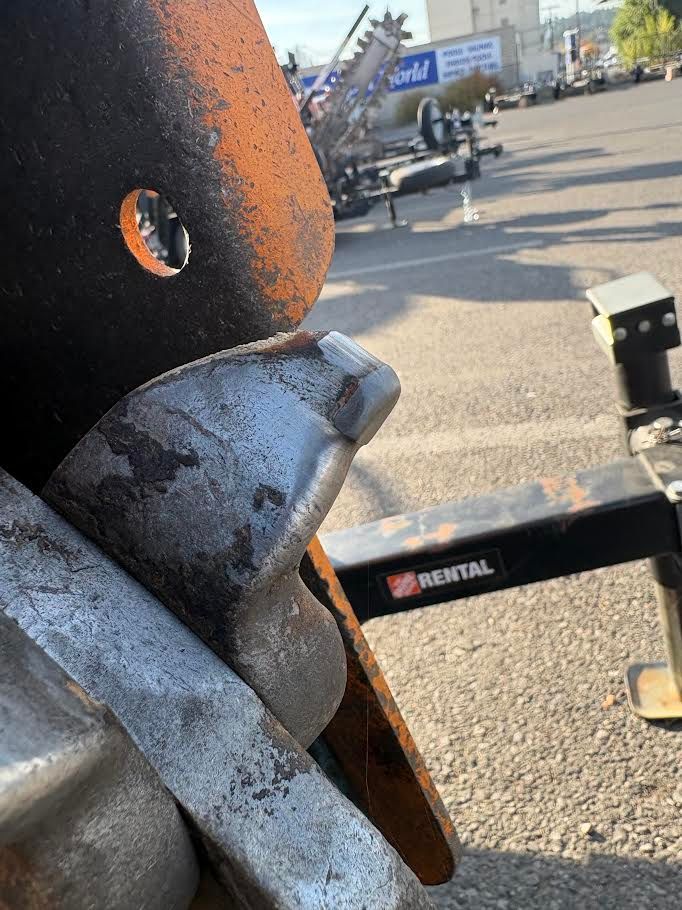
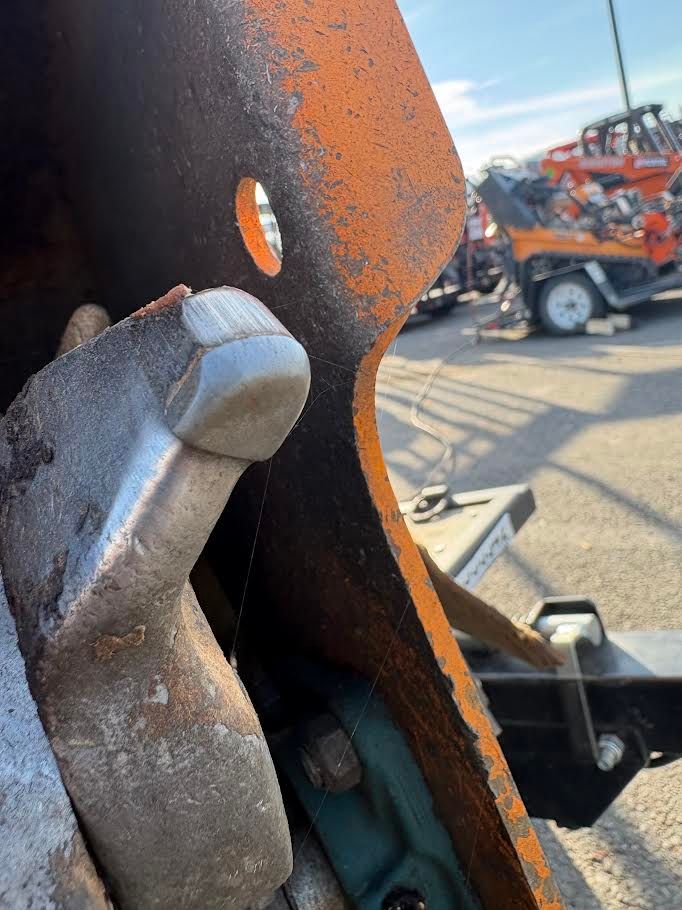
That's one carbide tooth on the cutting wheel, photographed from the front and then from the side. The machine was parked out front with the rental tag on it, ready to go. It would have started. The wheel would have spun. Somebody was going to tow it home.
What you're looking at
A stump grinder doesn't chew wood the way a chainsaw does. It carries a row of carbide-tipped teeth around a spinning wheel and swings them through the stump, and each tooth takes a small bite on each pass. A fresh tooth ends in a defined edge. As it wears, that edge rounds over and the bite gets smaller every hour it runs.
Look at the first photo. There's no edge left. The tip is a dome, polished bright from rubbing. That's the tell: cutting leaves a tooth dull grey with sharp corners, rubbing leaves it shiny and round. The side view shows the same thing from a different angle, with a flat worn into the top where it's been riding on the wood instead of biting into it.
Our rule of thumb: once the tip is rounded to about a 1/16-inch radius, the tooth is done. It still looks like a tooth and it still spins, but it isn't cutting anymore. This one is well past that.
It's one tooth. So what?
Fair question. We photographed one tooth, not the whole wheel, and one worn tooth on its own isn't a crisis. What it tells you is that nobody looked. A tooth this far gone didn't get that way overnight, and it was sitting on a machine marked ready to rent. If this one slipped through, assume the rest of the wheel hasn't been checked either, and go look.
Why it matters more on a rental than on our machines: the towable units most yards rent run a 12-horsepower engine. Sharp, that engine bites and throws chips. Dull, it polishes the stump, bogs down, heats up, and turns a two-hour job into a six-hour one that may not finish. There's no power in reserve to force rounded teeth through hardwood the way a 25-horsepower tracked machine can. We wrote the long version in our rent-or-hire guide. The short version: on a small machine, sharp teeth make or break your day.
This isn't a knock on the yard, either. A rental counter checks what a rental counter can check: it starts, the wheel spins, the trailer lights work. Teeth are a wear item, usually billed per tooth when they come back broken and usually sitting outside the damage waiver. Whether they're sharp when the machine goes out is, in practice, your problem the moment you sign.
Before you tow it: a one-minute look
- Get down and look at the wheel. You want the tips of the teeth, not the side of the machine. Phone flashlight helps.
- Look for an edge. A good tooth has a visible corner where the top meets the face. A done tooth looks like a worn pebble.
- Look for shine. Bright, polished tips mean rubbing. Dull grey with sharp corners means cutting.
- Check a few, not just one. If most of the wheel looks like our photos, the set is done.
- Count the pockets. Missing teeth mean the wheel is out of balance and somebody's getting billed. Make sure it's not you.
- Say something at the counter. Ask them to swap or sharpen the set, or give you a different machine. That's a much easier conversation in the yard than from your driveway at noon.
Renting from Cheney or Airway Heights? Look before the tow
The grinders we found for rent are in Spokane, or over in Hayden and Coeur d'Alene. For a lot of our customers that's a real tow: out Highway 2 to Airway Heights, down Highway 904 to Cheney, up to Deer Park or Chattaroy, and back before the counter closes. Dull teeth found at home mean towing it back, arguing about it, and losing the day you rented it for. That's the real cost in the photos above: not the tooth, the hours on either side of it. If you rent, make the look at the wheel part of the pickup, same as checking the trailer lights.
Or let us bring the sharp ones
When you hire it out, sharp teeth are our problem. We bring the machine that fits the gate, file the 811 locate as part of scheduling, and the chips either go back in the hole or leave on our trailer. Every stump gets a written estimate before anything is scheduled, and if the photo you send us shows a stump a rental machine could handle, we'll say so. We cover Spokane, Cheney, Airway Heights and the rest of the Spokane and Coeur d'Alene region.
Quick answers
How can I tell if a stump grinder tooth is dull?
Look at the carbide tip. A sharp tooth ends in a defined edge. A dull one is rounded over and polished, like a worn pebble. Once the tip is rounded to about a 1/16-inch radius it's done cutting, even though it still looks like a tooth and still spins.
Do rental yards sharpen stump grinder teeth?
Not routinely. Rental counters check that the machine starts and the wheel turns. Teeth are a wear item, often billed per tooth outside the damage waiver, so whether the set on the machine is sharp is yours to check before you sign.
What if the teeth are dull when I pick up the rental?
Ask the counter to swap or sharpen them before you leave, or ask for a different machine. A small-engine grinder with dull teeth polishes a hardwood stump instead of cutting it, and the day can end with the stump still in the ground. If you're renting from Cheney or Airway Heights, that conversation is a lot easier at the counter than after the tow home.